
Time:2026-01-08 Views:138
Drones pose two major lethal threats to airports: they are not just a matter of terrorism
When it comes to the threat posed by drones to airports, many people's first reaction is "terrorist attack" - such as drones carrying explosives crashing into aircraft or crowds. However, in reality, the dangers posed by drones extend far beyond this. Identity theft is becoming a more covert and widespread threat.
1. Terrorism and public security threats
Airports are highly populated places, and the intrusion of drones carrying dangerous items such as explosives and flammable materials can potentially lead to massive casualties and property damage. In 2018, Gatwick Airport in the UK experienced the delay of 1,400 flights due to drone interference, disrupting the travel plans of 120,000 passengers. In 2022, an incident occurred at Dallas Airport in the US where a drone carrying suspicious items caused the airport to be shut down for two hours. These cases serve as reminders that drones have become a "new tool" for terrorists.
2. Identity theft: a more covert "digital crime"
At the security checkpoints and check-in counters at the airport, passengers are required to present sensitive documents such as passports and ID cards. If a drone equipped with a high-definition camera approaches stealthily at this time, it can record key information such as the name, ID number, and passport number on the documents within seconds. Once these details are obtained by identity thieves, they may be used to forge documents, steal bank accounts, or even commit telecommunication fraud.
Addressing drone threats at airports: professional defense systems are key
Faced with the dual threat posed by drones, traditional security measures such as manual patrols and surveillance cameras have become inadequate. Professional airport drone defense systems have emerged as the core weapon in preventing unauthorized drone flights.
1. Multi-technology integration: precise identification and counteraction
Modern drone defense systems typically integrate three major functions: radar detection (enabling long-range monitoring of drones), electro-optical tracking (precisely locating targets), and signal jamming (cutting off the connection between drones and operators). When a drone enters a no-fly zone at an airport, the system will immediately issue an alert and force the drone to return or land through directional jamming, thereby preventing it from carrying out destructive activities from the source.
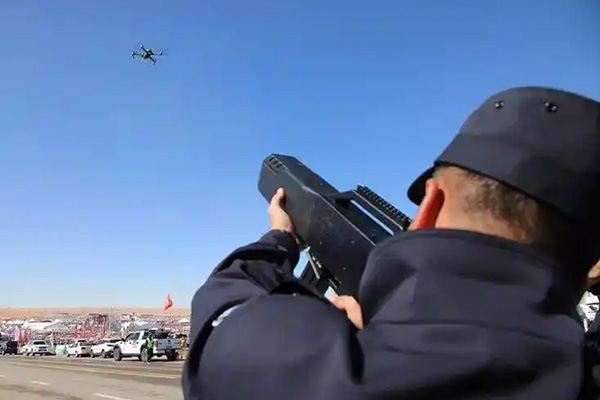
In addition to fixed defense systems, portable drone countermeasures guns are also an important supplement to airport security. These devices are small in size and lightweight, making them easy for security personnel to carry around. They can quickly disable the drone's control system (such as cutting off the power supply and jamming navigation signals) at close range.
Conclusion: Be vigilant against drones to safeguard airport security
Airports are the "gateways" of cities and also the "front lines" of public safety. Faced with the potential threats posed by drones, we cannot take it lightly. By installing professional drone defense systems, strengthening daily monitoring, and promoting public education, we can effectively prevent the occurrence of "uncontrolled drone flights," creating a safer and more reassuring travel environment for passengers.


 中文
中文